ANANSESEM — The Great Jollof Summit
Exploring the Richness of African Cuisine
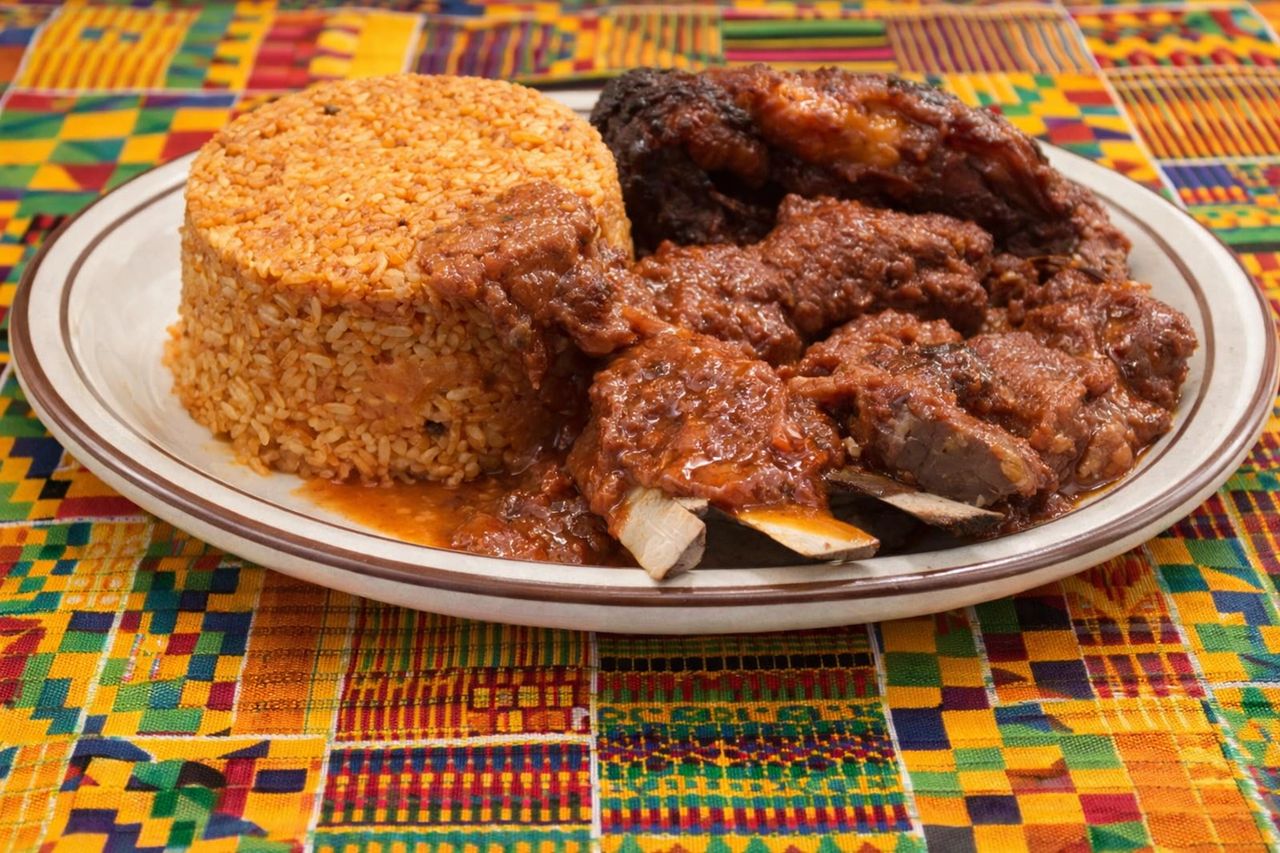
ANANSESEM — The Great Jollof Summit
What Is Jollof Rice?
Jollof rice is more than a beloved West African dish—it is a shared cultural inheritance shaped by history, movement, and memory. At its core, Jollof is rice cooked in a richly seasoned tomato-based sauce, infused with aromatics, spices, and fire. Yet what makes Jollof remarkable is not a single recipe, but the many truths it holds across borders.
Most culinary historians trace Jollof’s origins to the Senegambian region, where the Wolof people prepared thieboudienne, a rice dish cooked with fish, vegetables, and a deeply flavored sauce. As rice cultivation expanded and cooking methods evolved, this foundational dish traveled inland and along the coast, carried by trade routes, migration, and intermarriage. Over time, the name transformed, techniques shifted, and Jollof took on new expressions—each shaped by local ingredients and taste preferences.
As Jollof moved through Ghana, Nigeria, Sierra Leone, Liberia, The Gambia, and beyond, it adapted to its surroundings. In some kitchens, it became smoky and fire-forward, cooked slowly over wood flame. In others, it leaned toward bold heat, heavy spice, or deeper tomato richness. Some versions favor softness and balance; others celebrate intensity and bite. Each pot tells the story of a place, a people, and a way of life.
This diversity is precisely why Jollof inspires such passionate pride and friendly rivalry. To declare one version superior is to declare one memory more valid than another—and that is where debate turns playful, loud, and deeply personal. Jollof appears at weddings, naming ceremonies, festivals, funerals, and family gatherings. It is cooked for celebration and for comfort, for guests and for home. It is the dish that brings everyone to the table and keeps the conversation going long after the plates are empty.
Jollof endures because it is adaptable yet rooted, simple yet profound. It honors fire, patience, and communal cooking—values central to West African life. Every spoonful carries history, every pot carries intention, and every cook adds their own voice to a story that is still being told.
Before the debate, before the jokes, before the stories—there is Jollof. And like all great traditions, it invites us not to choose sides, but to listen, taste, and remember.
2. The Anansesem — The Great Jollof Summit
Why We Tell This Story about Food in Africa
In Africa, especially in Ghana, food is never served alone. Every dish arrives with memory, movement, and meaning. In West African tradition, recipes are not only written—they are told, sung, debated, and passed down through story. One such tradition is Anansesem, the art of teaching wisdom through folklore.
Before we cook Jollof, before we debate whose pot is best, we tell this story.
Not because it settles the argument—but because it explains why the argument exists at all.
What you are about to read is an Anansesem inspired by traditional folklore and the shared culinary history of West Africa. It reflects the spirit of the kitchens that shaped us, the elders who taught us, and the fire that still burns beneath every pot of Jollof we serve.
This story is told the way our elders would tell it—when the fire is ready, the rice is resting, and everyone has gathered close.
ANANSESEM — The Great Jollof Summit
A Tale of Tricksters, Spirits, and Smoke
Inspired by Traditional Folklore
Created by Sylvester Osei-Fordwuo
A Story the Elders Would Tell When the Fire Is Lit
Long ago—when the sky was still young and the stars gathered each night to taste the earth’s finest dishes—the Spirit of Flavor sent his town crier across the land with a proclamation that rolled like thunder over rivers and kitchens alike:
“Let all who command rice and fire come forth.
A council shall be held.
We must decide who will guard the sacred flame of Jollof.”
The call traveled through mangroves and marketplaces, over clay stoves and open fires. Women paused mid-stir. Fishmongers lifted their heads. Children froze with grains of rice clinging to their fingers.
The Great Jollof Summit had been called.
The Three Who Answered the Call
Maam Kumba Bang — Keeper of the Waters (Senegal)
From the Atlantic coast, the sea parted like a woven curtain, and Maam Kumba Bang rose from its depths. She moved with the calm authority of tides that have shaped shorelines for centuries, carrying a driftwood pot cradled like a newborn.
Before flame touched pot, she scattered salt upon a woven mat and whispered to the ancestors:
“Guide my hand.
Bless my fire.”
Her thieboudienne simmered slowly—fish, vegetables, and memory mingling into a broth that carried the wisdom of Wolof elders and the echoes of ancient empires.
“Jollof was born in my waters,” she declared.
“It carries the rhythm of the sea and the scent of the first fire.”
Ijapa — The Smoky Strategist (Nigeria)
From the east came Ijapa the Tortoise—late, as expected, yet utterly unbothered. His shell bore the scorch marks of countless fires, and his pot arrived already smoking like a festival drum.
He spread a bright Ankara cloth, tapped his spoon three times, and announced:
“Even the slow tortoise arrives with flavor.”
His rice was bold—heavy with chili, smoked pepper, and confidence. It roared with heat and celebration, the kind of rice that does not whisper but dances.
“Taste my party rice,” he proclaimed.
“In my land, even the rice knows how to move.”
Anansi — The Trickster Chef (Ghana)
And then there was Anansi.
No pot.
No invitation.
No rank.
Yet somehow, he was already there—watching from the rafters, spinning quiet threads of observation.
When the night deepened, Anansi crept near Maam Kumba Bang’s pot and borrowed a strand of ocean wisdom. Then he tiptoed beside Ijapa’s fire and plucked a spark of smoky pride.
Back home, he set a humble clay pot over a small flame and whispered:
“The spider spins with borrowed silk…
but the web is his own.”
By dawn, Ghana revealed something entirely new.
Rice glowing tomato-red.
A fragrance like festival morning.
Heat gentle enough to invite, bold enough to linger.
And at the bottom of the pot—a golden crust, omo ase, the treasure every cook hopes for and every child fights over.
The Tasting of the People
The Spirit of Flavor called forth the true judges—not kings or nobles, but mothers, fathers, griots, fishermen, and children with bright eyes and louder opinions.
They tasted.
They sighed.
They told stories.
Tongues loosened. Laughter stitched itself into memory. Flavor became language, and language became belonging.
“Where did this come from?” the people asked.
Anansi dropped from above, grinning.
“From listening.
From learning.
From weaving the best of all into something new.”
Steam rose from the pots and shaped itself into ancestral faces—smiling, approving, blessing the feast.
The Spirit’s Final Word
As the fires dimmed and only the perfume of tomato and smoke lingered, the Spirit of Flavor spoke:
“The dish belongs to all who honor the fire.
Let every land cook its truth.”
And so the summit ended the way all West African stories should—with a feast.
The tortoise tapped his shell like a drum.
Anansi plucked his web like a harp.
Maam Kumba Bang swayed like the tide.
The people ate from one bowl, knowing rivalry and respect could share the same table.
The Journey of the Flame
From that day forward, Jollof traveled coastlines and borders—carried by fishermen, traders, mothers, migrants, and dreamers.
It changed with every pot, yet never lost its spirit.
Some made it smoky.
Some made it fiery.
Some simmered it slow and soft like a love song.
Each version honored the ancient agreement:
Flavor is a shared inheritance.
Memory is the true flame.
Why This Story Still Matters at Our Table
At African Grill and Bar, this Anansesem is more than entertainment. It is a reminder that Jollof is not a competition—it is a conversation that has traveled generations, borders, and oceans.
When guests ask us,
“Who makes the best Jollof—Ghana, Nigeria, or Senegal?”
we smile, as our elders taught us, and say:
“The pot remembers every hand that stirred it.”
This is why we cook the way we do—with patience, respect for fire, and deep regard for where the dish comes from. Every plate of Jollof we serve carries the spirit of shared inheritance, not a single claim of ownership.
The Great Jollof Summit was never about winning.
It was about belonging.
And here at African Grill and Bar, we invite you to take a seat at that long table—where stories are shared, rice is passed, and family is made one spoonful at a time.
3. What the Story Teaches Us About Jollof
The Great Jollof Summit reminds us that Jollof is not defined by rivalry, but by relationship. Every pot carries echoes of migration, trade, and shared fire. What appears to be competition on the surface is, at its core, a conversation between kitchens—each shaped by local ingredients, climate, memory, and taste.
The story teaches us that Jollof was never meant to be static. It was born to travel, to adapt, and to reflect the people who cook it. Whether smoky, fiery, or gently spiced, each version reflects its home. There is no single winner, only many expressions of the same ancestral idea.
At African Grill and Bar, we take this lesson seriously. Our Ghanaian Jollof honors balance: depth without heaviness, heat without overwhelm, and patience above all. We cook it the way we were taught—by listening to the pot, respecting the fire, and allowing the rice to absorb not just flavor, but intention.
Jollof endures because it invites participation. It brings people together at weddings and funerals, festivals and family tables. It asks us to sit, eat, argue gently, laugh loudly, and remember where we come from.
That is the true flame the story protects—not ownership, but belonging.
4. How We Prepare Ghanaian Jollof
(Without Giving the Fire Away)
At African Grill and Bar, our Ghanaian Jollof is not written down in exact measurements—and that is intentional. Like many West African dishes, it is learned through repetition, patience, and listening to the pot. The balance of heat, acidity, and depth comes from experience, not shortcuts.
Let's share with you the philosophy behind the dish.
Our Jollof begins with a slow-cooked tomato base, built patiently until the rawness disappears and the sauce deepens in color and aroma. The rice is added only when the foundation is ready—never rushed, never stirred unnecessarily. Heat is controlled carefully, allowing the grains to absorb flavor without losing their structure. Resting the rice is just as important as cooking it; this is where the final harmony settles.
Most importantly, our Jollof is cooked with intention. Fire is respected. Timing is felt, not forced. And every pot is adjusted by sight, sound, and scent—just as our elders taught us.
For those who want to taste Ghanaian Jollof prepared this way, we invite you to join us at African Grill and Bar. The full lesson is best learned at the table, with a spoon in hand.
Because some recipes are meant to be shared on paper.
Others are meant to be shared in person.
“The story can be told anywhere—but the flavor must be experienced.”


Comments
Post a Comment
Share your thoughts — food and culture are conversation.